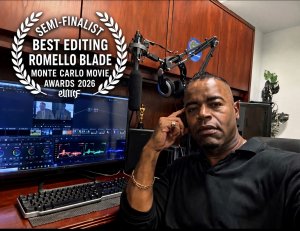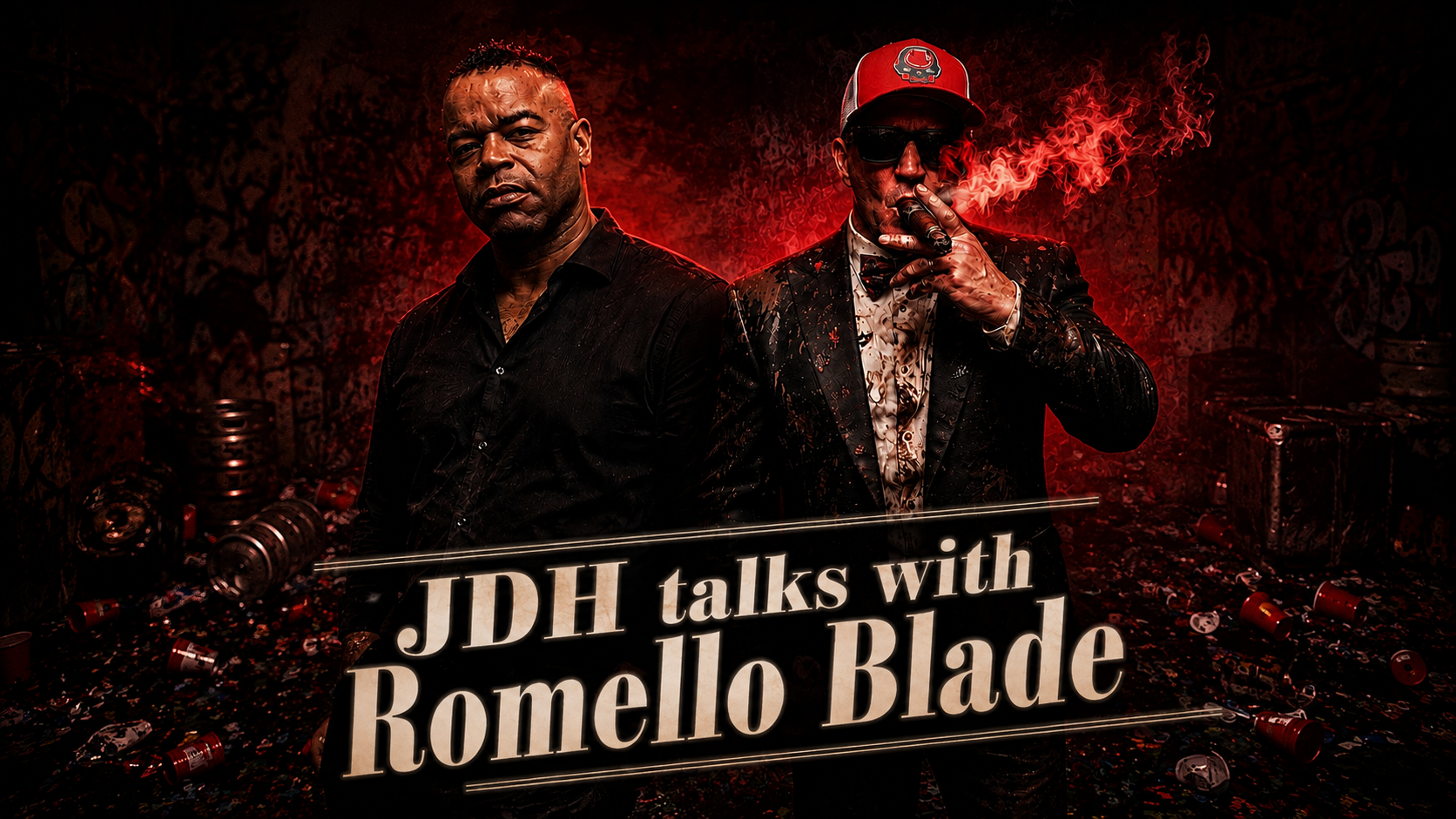
From a one‑man edit room to a staffed facility, Romelo explains the planning, compromises and quality rules behind scaling an indie studio
Romelo Blade opened the conversation with a line that explains everything he’ll not only say but do: he treats every project “like it’s my own” — and then he backs that with the work to prove it.
The move from kitchen edits to a headquarters
Romelo didn’t stumble into a shiny office. He planned, picked up side gigs and layered client work until the business could justify a facility in Daytona Beach. The space sits among other small businesses, but what matters is the function: a place where creatives, attorneys and service providers can trade referrals, test ideas and hand off work.
He framed the decision this way: the order of operations changed. The idea to expand existed, but opportunity arrived out of sequence — so he pivoted when the timing was right. The result is United Blade as a visible hub that sells not just editing but a promise of craft.
United Blade’s service stack (not a checklist, a capability)
Romelo lists what United Blade does for real projects, not hypothetical clients:
- Trailers and marketing assets
- Script notes and writer collaboration
- QC and distribution prep (Film Hub experience)
- Sound work and mix corrections
- VFX: object removal and added effects
- Location and production support
He’s also building a team around franchises: writers, a creative director (Regina Womba, credited on the new Ghost of the Game poster), grips and a DP on standby for Great People 2. That’s deliberate — he wants editors and junior creatives he can train to meet United Blade’s standards rather than churn content.
Why care matters more than hustle
The spine of most of our conversation returned to one claim: an editor can make or break a film. Romelo said it plainly: when he joins a project he “nurtures that baby” — he watches footage until it’s right, sometimes a hundred times. The implication is operational: if you hand a film to someone who treats it like a task, quality control (QC) will find the flaws; if you hand it to someone who treats it as theirs, it survives distribution gates.
That’s why Romelo’s most common work is QC and distribution prep. He made Hostage move through Film Hub with only one kickback. His argument is simple: take the time to fix technical sound levels, poster layers, and the kind of details streamers reject. He’s blunt about the consequence of rushing: “If you’re not taking that time… that’s your baby — then what are you doing?”
“When I come on board I’m looking at it like it’s my own, and I’m gonna take care of that and nurture that baby.” — Romelo Blade
Burnout, the editor’s curse, and how he manages it
Romelo described the rhythm of long projects: you stare at the screen for hours, three clicks feel like progress, and then your brain locks. He calls it classic burnout — guilt drives him to keep working but the work stops being fruitful. His pragmatic solution is built into the process: step away, refresh, and return. The small acts — a day off, shorter sessions — are a form of risk management. They keep a project from being finished faster but worse.
He also said something worth bookmarking: being both a director and an editor changes how you work on set. Editors see coverage, continuity and future cuts while shooting. That’s why Romelo offered to be on set for Hostage 2 — not because presence is always necessary, but because it can make the post timeline far tighter when scale and deadlines demand it.
Franchises, casting luck and scaled production thinking
Romelo has been quietly building the Great People franchise. The plan is to shoot multiple entries close together and to staff a core creative team so the company isn’t dependent on one person’s capacity. He already has a DP, camera operators, a script supervisor and a grip who worked on the first film — with a few roles still open.
On casting, he’s realistic: indie shoots don’t get infinite takes or A-list actors. He reminded us that sometimes the actor you didn’t expect ends up being perfect. That flexibility — hiring for fit rather than fame — is part of a practical growth plan that anticipates imperfect sets and tight budgets.
How Romelo thinks about AI and the future of work
Romelo’s take on AI is refreshingly pragmatic: it’s a tool, not an existential enemy. He doesn’t want AI actors replacing performers, but he does see AI as an enabler for effects and scale that indies couldn’t otherwise afford. That means rewriting some stories to leverage AI-driven VFX or de‑aging in specific shots, allowing smaller teams to attempt bigger ideas.
Couple that with the changing streamer landscape — fewer series episodes, bigger consolidation at the studio level — and Romelo thinks opportunities will be uneven. Big mergers compress jobs at the top, but independents who get budgets right and offer reliably high technical standards can still capture talent and distribution slots.
The one technical habit that keeps films from getting kicked back
If you take nothing else from this conversation, take this: sound levels and poster metadata fail submissions more often than plot holes. Romelo runs projects through the technical checklist streamers expect — dialogue thresholds, music balance, decibel windows, poster layers — and he teaches his clients why those things matter. It’s the difference between a quick pass to distribution and multiple rejections.
Roadmap and the practical three‑to‑five year bet
Romelo’s horizon is concrete: three to five original films, more projects making it to theaters or streamers, and a business that films on set a couple of times a year rather than one‑off jobs. The staffing plan is explicit: hire junior editors and writers, train them to the United Blade standard, and keep the care intact while increasing throughput.
He’s recruiting for creative leads, and credits Regina Womba for the recent poster work — a reminder that visual craft often comes from collaborative hires, not solo genius.
Romelo’s closing posture is the one that makes his business durable: quality control is a gate, but empathy and craft are the reason people keep hiring you. He’s scaling by turning the things he can’t outsource — care, taste, the last‑mile fixes — into training for the people he hires.
If you want to hear how he explains QC failures, how he plans to edit Great People 2 (he’ll be involved even if he delegates), or why he invited JDH to make Hostage 2 together, the full conversation walks through those scenes with the kind of detail only someone who edits for a living can offer.
If you liked this, Romelo and I kept going for an hour — there’s a long bit on production logistics, poster work and the exact moments Film Hub asked for fixes. Listen to the episode for the operative checklist and a few production war stories you’ll want to file away.