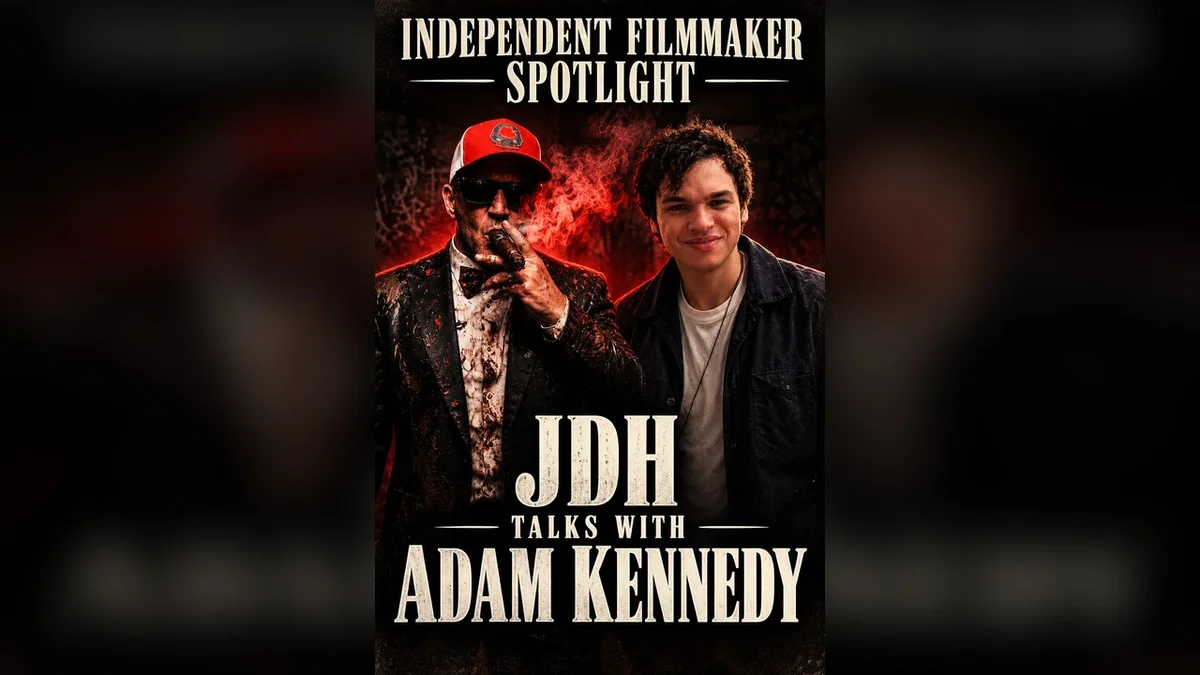
Adam Kennedy on stitching shorts into a feature, obsessing over color grading, and why distribution contracts can quietly steal your movie.
“They use arbitration to prevent you from being able to take any legal action against them.” — Adam Kennedy
Adam Kennedy opens here not with festival strategy but with a warning: distribution contracts are full of traps. He names the practical losses — months waiting on Filmhub QC, a collapsed deal, and clauses that read like loopholes — and the emotional ones: a cast who can’t easily watch the film you made together.
The feature that began as seven shorts
Adam’s feature An Assassin Walks Through the Trees didn’t start as a single blueprint. He literally stitched seven short films together and found the result coherent enough to release. That decision did three things for him: it made the project less scary, let him shove “every idea I’ve ever had” into one piece, and gave him room to experiment with tone without forcing a conventional three-act structure.
He contrasts that early approach with the way he writes now. Where some writers begin with plot beats, Adam builds from character and scene: find a scene idea, then try different characters in it until the scene shifts into something honest. It’s why his films sometimes feel patchwork and why they also carry an auteur’s consistency.
Make more with less: shooting, editing, and color work
Budget was never the reason to stop making things. Adam describes shooting shorts for a couple of hundred pounds and still getting festival notice. The real secret, he says, is time in the edit and obsessing over image craft.
Color grading came up repeatedly. Adam taught himself grading rather than outsourcing it because it’s where a low-budget film can leap ahead. He explained how many indie filmmakers shoot Log or Rec.709 and then leave the image in the default conversion — a missed opportunity. He spends hours dialing his images until they feel like part of the film’s language.
He also wears many hats: director, sometimes DP, sometimes editor. That “fewer chefs” approach smooths production for him, but he’s clear that strong collaborators are indispensable. JDH pushed back with his own experience: early DPs and editors can transform a script into something better, and when they share a vision it beats trying to do everything yourself.
Distribution is where the fight happens
This is the episode’s sharpest and most practical strand. Adam walks through three real distribution headaches:
- Filmhub’s QC slowdown: a film that passed once suddenly didn’t for the next release, leaving him waiting six to seven months with no update.
- The premium QC bait: a partner recommending “premium QC” at roughly $500–$600 to get on a curated slate.
- Contract horror stories: clauses that contradict themselves, mid-sentence cutoffs, and arbitration language that effectively blocks you from suing a distributor.
He tells a familiar but vital tale: a mid-tier distributor once handled his earlier film, sold territories, and charged for trailer art and promotion in ways that left the filmmakers with almost no net revenue. When an actor discovered the film running on a hotel pay-per-view in Mexico, the distributor went dark. The legal fight that followed cost tens of thousands and years of effort before they recovered the rights.
Adam’s takeaway: read every contract, get an entertainment lawyer early, and be wary of arbitration clauses that shift cost and access onto you. JDH and Adam both note the trade-offs between platforms like Filmhub, IndieRights, Quiver, and traditional distributors — there’s no perfect route, only consequences you should understand before signing.
Where the films are now (and what’s next)
- An Assassin Walks Through the Trees is available on Tubi. Adam says it’s getting “half-decent numbers” and that, when it first went through, it effectively had premium QC already.
- Dear Vengeance is caught in a distribution limbo: deals collapse, offers arrive then change, and the film waits while cast and crew can’t easily view it.
- Godless Masks is in editing; Adam admits he’s spread thin because he wants to keep making films.
A caution and a promise
Adam’s story reads like a practical manifesto for indie filmmakers: be prolific, learn technical craft (editing and color grading matter), keep your team small but skilled, and protect the film legally. He also shows the softer side — why you keep making things even when deals fall through. The instinct that started with making bloody animations as a kid is still the engine: stories he can’t not tell.
If you want more: the full conversation covers specific contract clauses, anecdotes about selling foreign territories, and the step-by-step way Adam learns new technical skills. It’s a good listen for anyone finishing a film or about to sign distribution paperwork.
— If you make films, read your contracts. If you make art, keep making it.
If you want to hear the whole episode, there’s more detail and a couple of moments JDH and Adam trade that you’ll appreciate when you listen.