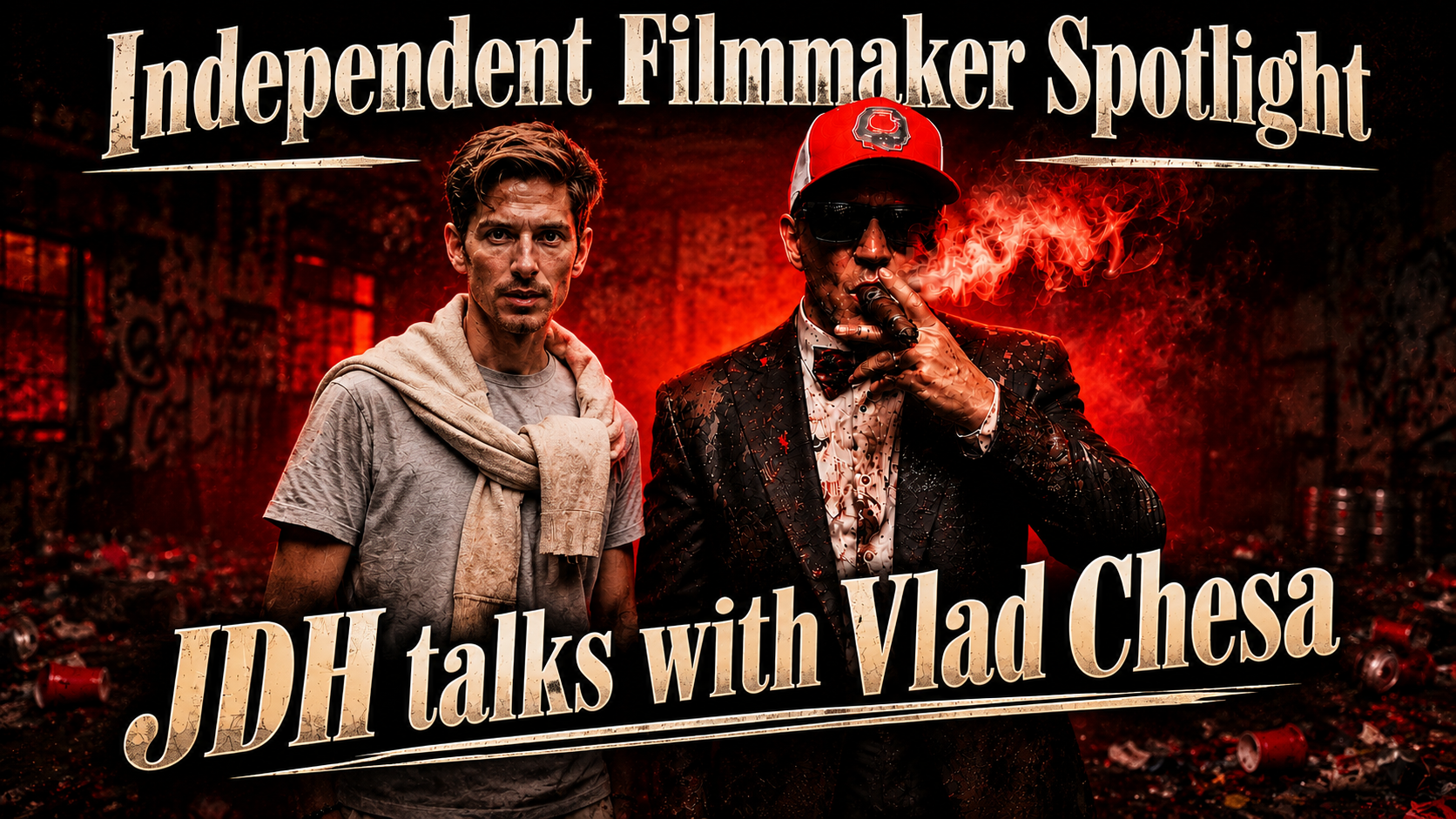
How Vlad taught himself camera, leaned into collaboration, and is betting a YouTube-first series after a 48‑hour film sprint.
Vlad Chesa grew up in front of sets because his stepfather was a gaffer. He started shooting on an old VHS at 12 or 13, taught himself editing from Photoshop habits, and says the impulse to tell stories is “a curse and I have to do something with this.” That line lands the minute you hear him: filmmaking for him is less a career choice than a compulsion he keeps answering.
Why start on set matters
Being on location as a kid gave Vlad a practical map most screenwriters don’t get. He was an RV driver, then a set driver, and watched how production days were actually built: security to protect cars, catering arrival times, where the director plugs in. He credits that early exposure with his ability to organize shoots efficiently today. It’s the kind of detail that separates a shoot that feels chaotic from one that finishes on schedule.
Vlad taught himself camera and editing the same way many of us learned code or design: by doing. He learned Photoshop from a friend who tuned cars, discovered Adobe Premiere from that familiarity, and found rhythm — not software — was the key skill. “No matter what type of editing thing you learn…it’s just a tool,” he says. The thing that matters is the image in your head and knowing which beats you must hit.
How he balances craft and collaboration
At first Vlad did everything: writer, director, DOP, editor. Then he realized two things. One, collaboration improves the work—he partnered with one of Romania’s best DOPs and a producer who could find money and people. Two, letting go of roles raised the quality. He still writes and directs when he can, but now he tries to hire (or partner with) specialists for camera, sound and production. The result: better films and fewer crises on set.
A concrete example: his feature found straightforward distribution in streaming and some theatrical play, but his 45‑minute documentary about maternity and parenthood has been far harder to place. He aggregated to Amazon UK/US/Japan and submitted to FilmHub in October/November; the dashboard still says “submitted.” His takeaway: distribution paths vary wildly by market and by genre. Documentary niche + local language = different strategy than a translatable Romanian feature.
Practical money and distribution tactics that actually work
When investors are scarce, Vlad sells exposure and ancillary content. He treats a film as a content generator: behind‑the‑scenes, clips, branded partnerships. He looks for grants, but pitches commercial partnerships directly and favors a solid pitch deck that demonstrates commercial value.
Some useful specifics he mentions:
Short film budgets in good markets can hit ~200K for a standout piece, so expectations differ regionally.
FilmHub and aggregators are common routes; there’s a $500 fast‑track option you can pay to speed processing.
YouTube is viable if you plan the marketing across Instagram, TikTok and other platforms; Vlad plans to launch a series on YouTube with product placement and collaborations rather than relying solely on traditional distribution.
The 48‑hour film challenge and what it teaches producers
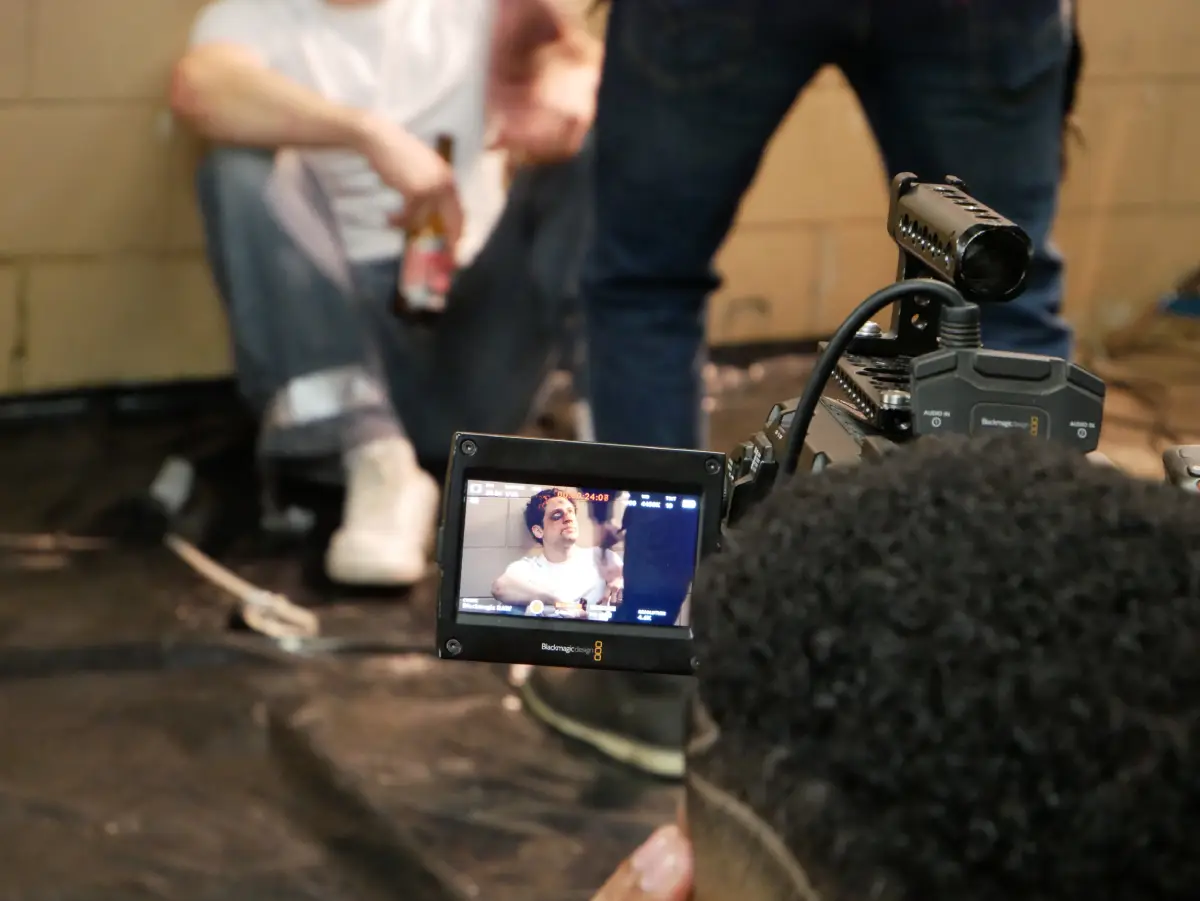
Vlad is producing for the London 48 Hour Short Film Challenge (Sept 11–13). The format gives a genre, character, object and a line of dialogue on Friday, then you write, shoot, edit, score, color and deliver in 48 hours. Rules include no pre‑recorded material and you cannot pay participants.
Why it’s useful: it trains problem solving under pressure—finding locations, food, crew and actors with zero budget is a producer’s bootcamp. Vlad points out you will always have at least three major issues on any project; this contest teaches you how fast you can solve them. He’s stepping in as DOP after a last‑minute crew drop, which is exactly the kind of contingency the event forces you to confront.
What he would tell a newcomer
Vlad refuses to hand out platitudes, but his advice is clear and specific: build resilience, don’t listen to the naysayers, and accept that the path is bumpy. He credits his wife with pushing him to go full time and says the hard months still happen—sometimes a creator needs to consider taking a job when cash runs out—but persistence matters.
He’s blunt about what you’ll need beyond craft: accountants, lawyers, and people who know contracts. If you want to keep creating, plan for those gaps or build a team that fills them.
“Don’t listen to anyone, just do your thing.” — Vlad Chesa
Vlad’s next steps are immediate and practical: finish the 48‑hour project, shoot a pilot in October for a series he wrote years ago (logline: a psychologist starts seeing spirits while trying to repair his relationship with his son after a divorce), and keep building a crew that handles the parts he doesn’t want to be stuck doing forever.
If you want one line to repeat tomorrow: teach yourself the craft, but learn to hand off the work. Do the messy early work so you know how a set breathes; then hire people who do it better. The middle ground—skill plus collaboration—is where independent films stop being lonely labors and start becoming products someone will pay to see.
If you want to hear the full conversation with Vlad about the London 48‑hour challenge, FilmHub submissions, and the practical checklist he uses on day one of production, the episode is worth the listen.