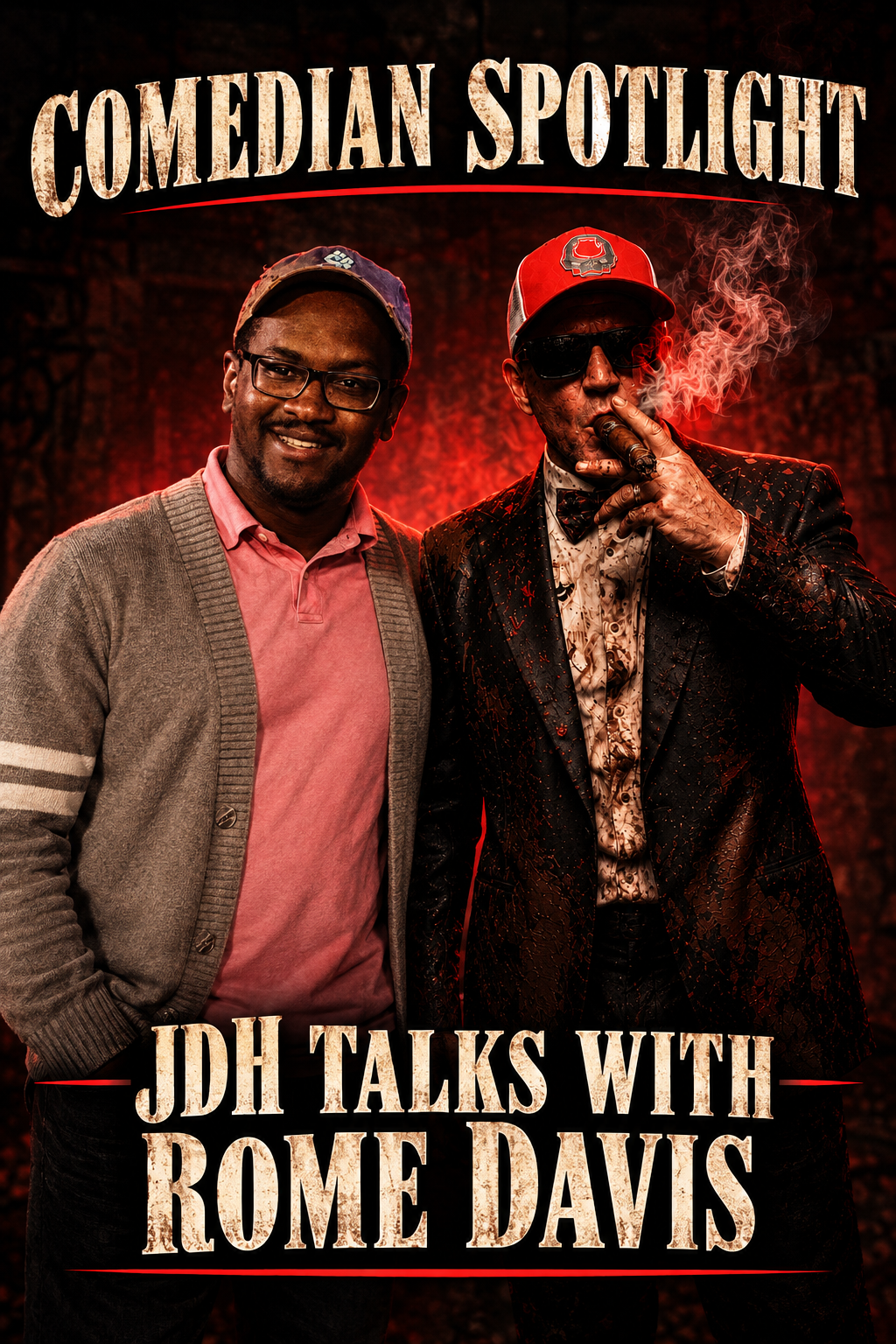
Seven years of stand‑up, a PBS piece, and a self‑shot 30‑minute special — plus the exact way he built material for a special.
“For every comedian to build up a solid set, you’re supposed to write five minutes. That five minutes is really three.” — Rome Davis
Rome started stand‑up in 2019 at the Virginia Beach Funny Bone, and he’s been tuning that engine for seven years. The recording lives in the small, stubborn details: how a “five‑minute” bit becomes a three‑minute breathing thing on stage, how jokes are road‑tested across markets, and how those repeat plays add up into a full special.
How he turned jokes into a 30‑minute special
Rome treats material like modular parts. He writes five‑minute chunks, then trims for timing, crowd reaction and pauses. Those chunks get recombined and retested — sometimes for three or four years — until they reliably land in different rooms.
Concrete moves he used:
- write a five‑minute segment and expect it to compress to about three
- test the same material in multiple markets and rework bits that don’t travel
- string tested segments together until they hit ~30 minutes of crowd work
He shot his first PBS piece with WHRO (a story‑exchange format about where you feel at home). His independent special, Rochambeau, was recorded April 10 and is 30 minutes of straight stand‑up plus crowd work under his own banner. The PBS piece gave him structure; the independent shoot let him keep distribution and creative control.
What the grind actually looks like
The practical costs are the kind people outside comedy don’t see. Rome talks about four‑hour drives for a 15‑minute set, and nights where he spends two to three hours for five minutes on stage. Travel, inconsistent pay, and rebooking frustrations pushed him to take control — so he produced his own special.
Small, telling habits show the economics: Rome doesn’t drink or smoke, so he’d use his drink tickets to cover friends’ drinks after a set. One awkward detail that landed in the recording: he keeps a stage photo as his profile on Facebook Dating and got his page restricted after a woman asked him to help her career and he fired back on stage. It’s the sort of anecdote that shows why a comedian’s life is both performance and real consequence.
Why stand‑up led him to film
Rome names Eddie Murphy, Kenan, and the Wayans as his cinematic teachers — not film school. Stand‑up trained him to 1) write relentlessly, 2) read a room in real time, and 3) accept the messy feedback loop of live audiences. Those skills translated into producing and distributing his own material.
He describes the decision to shoot a special as impatience with booking gatekeepers: “I put everything in my hands and I’m gonna shoot a special.” That agency — deciding to own the process from stage to distribution — is the episode’s throughline.
“I got irritated with some of the booking capabilities. I put everything in my hands and I’m gonna shoot a special.” — Rome Davis
If you want to hear how he structured the crowd work inside the 30 minutes, the road stories about testing jokes in different cities, and a few precise production lessons from his two specials, listen to the full conversation. It’s a short listen and the details repay it.
— JDH