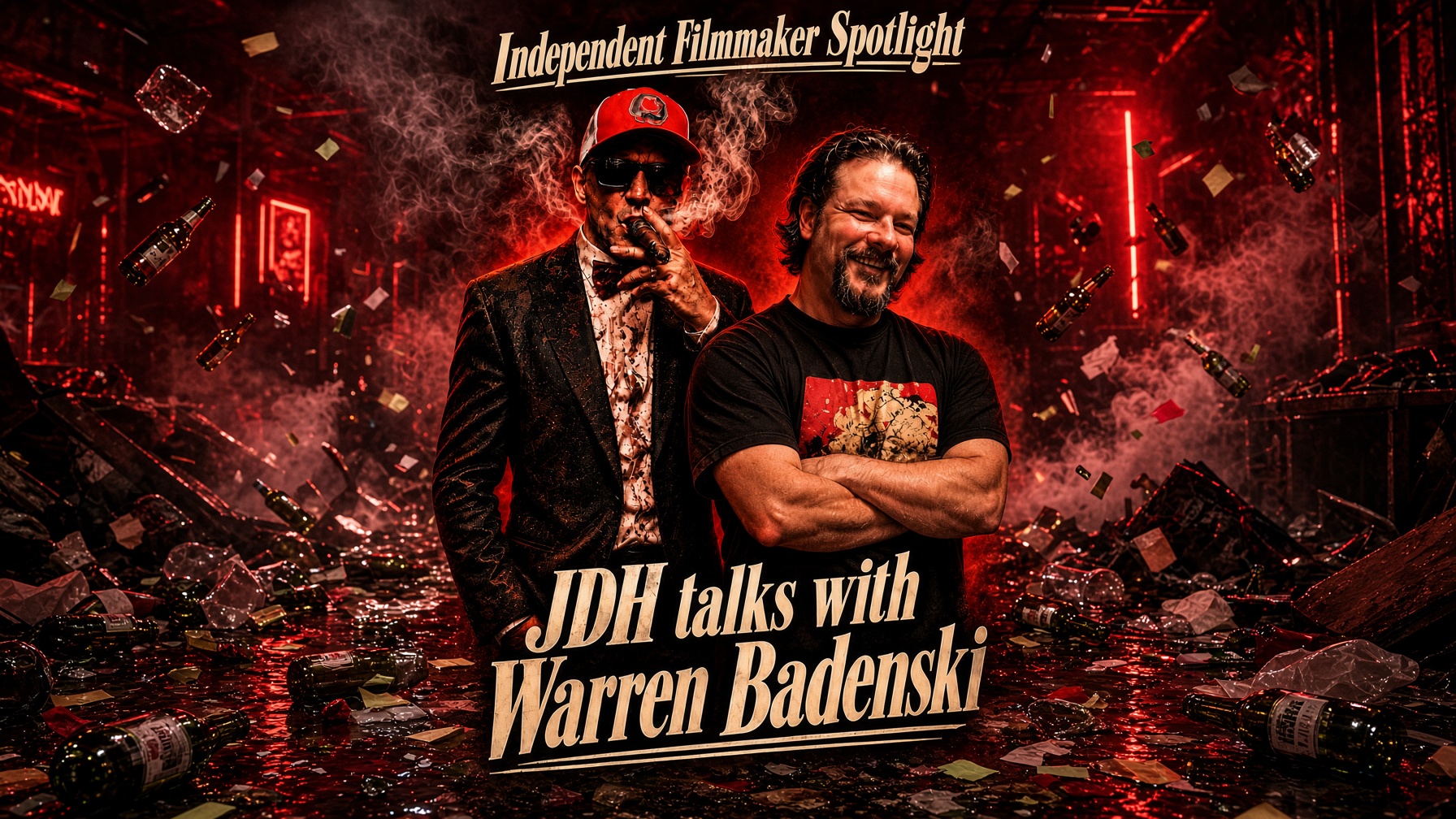
From a £1,200 debut shot in flats to a £3–5k follow-up and a Blu ray deal — what he learned about making films that travel.
“I reckon we probably spent about twelve hundred pounds.” — Warren Badenski
Warren starts the conversation by naming three early influences — Steven Spielberg, Harrison Ford and, unexpectedly, Winnie the Pooh — and that mix explains the rest of his career: big-picture imagination with a DIY, school-of-hard-knocks approach to craft. The line above is the one that stopped me; it’s his budget for his first feature, Simon, and everything that follows in the episode grows from that shape: tiny money, big ambition, and the particular luck that gets a film onto platforms people actually watch.
How Simon got made on almost nothing
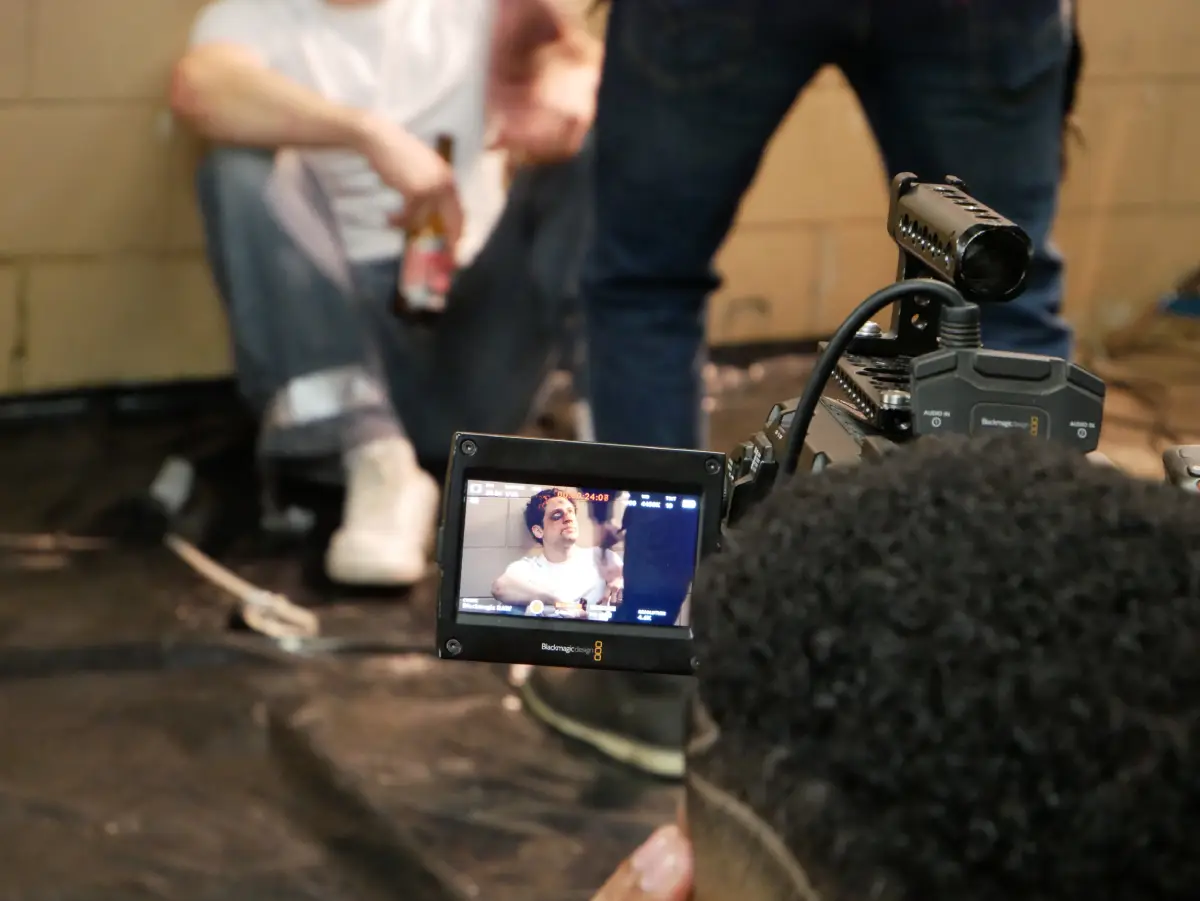
Simon began as a short that swelled into a feature. Warren wrote a compact core — he says a twenty- to thirty-page short became the spine of the feature — then stretched the rest around it. Locations were improvised: his flat doubled for multiple bedrooms, a friend’s basement provided a second set, and a local park and car park filled out the rest. An Indiegogo campaign “failed miserably” (he raised around £500 and lost platform fees), so the shoot depended on day jobs, favours and two intense weeks of filming plus a couple of pick-up days months later.
Two production details jump out because you hear them in every low‑budget set story: continuity surprises (an actor’s unexpected blue hair that “should wash out by the weekend”) and wardrobe/prop improvisation (one bedroom becoming three just by changing sheets and camera angles). Warren edited the film himself — starting on iMovie, moving to Final Cut — which mattered because he approaches directing with an editor’s eye: shooting with a sense of how it will cut together.
Turning micro‑budget into distribution
The distribution route for Simon was luck and networks. A producer who knew one of Warren’s actors watched their work, helped fund additional scenes, and connected them to a small distributor that placed the film on Prime, a few VOD sites and eventually Netflix in certain territories. Warren’s description of how Netflix works is blunt and useful: platforms often pay a one‑time license fee, not ongoing royalties, which is why films come and go.
Concrete numbers matter here: Warren estimates Simon’s total cost at roughly £1,200 (not including later distribution costs). Dead Name, his second feature, landed at roughly £3–5k. For Dead Name he found a distributor, Dark Side Releasing, who arranges Blu‑ray runs (two different covers, he proudly notes) and better placement on genre platforms. He also mentions Tubi as a place where indie horror can still earn through ad revenue — a reminder that different platforms pay differently and that the “prestige” of Netflix can be as valuable for conversation as for cash.
What he actually pays people and how he treats the crew
Warren is explicit about rates: early projects paid cast and crew minimal, legally acceptable wages in the UK or “something close to it,” and he prioritized making sure nobody went out of pocket. He prefers sharing a small slice with collaborators over hoarding potential upside — and he’s seen producers push back on that. Two practical principles he offers:
- Be upfront about what you have and what you don’t. Promising money or resources that don’t exist almost always backfires.
- Treat the set as a place people should want to be — make the process interesting, give credit, and keep communication simple.
Those aren’t inspirational platitudes; they’re tactics that kept his projects alive when the cash was close to zero.
Collaboration, actors’ ideas and why you should listen
Warren repeatedly returns to the same point: filmmaking is collaborative. He writes roles imagining himself as the lead, but then seeks actors who can “emote” better than he can. He highlights moments where actors or department heads transformed a scene — like an actor suggesting a villain revel in his cruelty with a smoking jacket and sunglasses — and Warren took it.
A short blockquote from the recording captures his ethos:
“If an actor has a suggestion, just let them say it. You don’t have to take everything, but let them say it.” — Warren Badenski
He also recommends finding your people: use actor directories, message boards, or low‑level industry sites to assemble a team. Much of his early career came from showing up, trading work for experience, and slowly building a stable of collaborators who’d do the next thing with him.
Practical advice for filmmakers who haven’t started yet
Warren’s advice is plain and useful: make something. He acknowledges failure — aborted shorts, lost footage, campaigns that flop — and reframes it as learning. Key takeaways:
- Start small and plan with what you actually have.
- Be honest with your cast and crew about budget and expectations.
- Listen to collaborators; good ideas can come from anyone.
- Accept that luck matters, but you increase your odds by shipping work and meeting people.
Those rules sit behind both his early shoestring success and the slightly larger budgets that followed.
Where’s he headed? Warren expects one or two paths in the next three to five years: more features, maybe a TV season or two, or increasingly producing other filmmakers’ projects. He wants his name on more films — whether as director or producer — and plans to keep working the horror sandbox because it’s flexible, community‑driven and still hungry for new voices.
If you want to hear the full rundown — the stories about festival timing, the Blu‑ray cover art, the awkward producer lunches, and the exact scene swaps that saved shooting days — the conversation with Warren Badenski is on the episode. His practical candor about budgets, distribution and collaboration makes this one of those talks you can actually act on.