


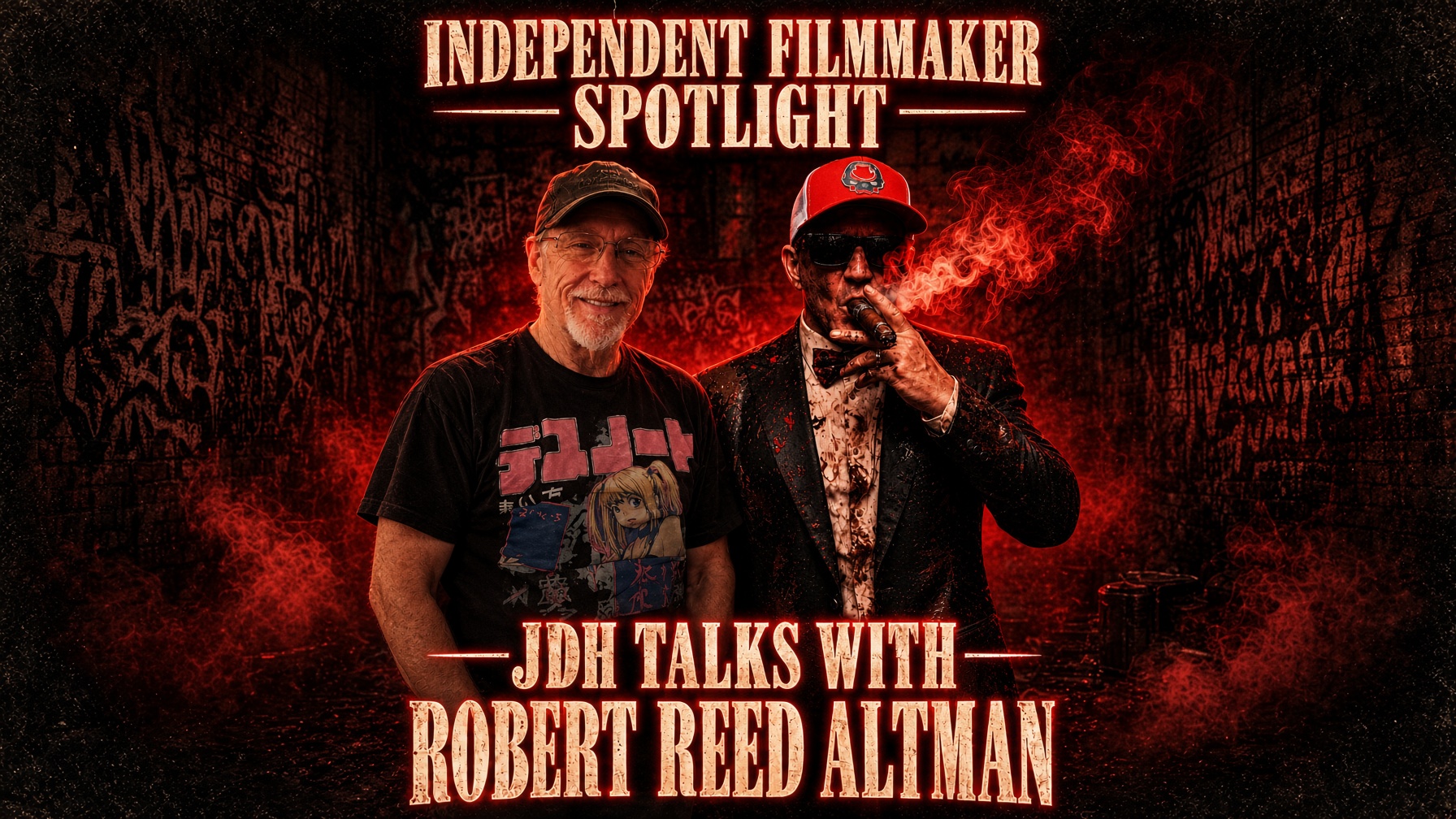
He started on Nashville at 14, worked on 17 of his father’s films, and is now directing an AI-heavy sci‑fi while writing a $15M drama.
“When I was fourteen my dad asked me to go to Nashville — I said I’ll stay two weeks and if I like it I’ll stay.” — Robert Altman
A short sentence that tells you everything about how Robert Reed Altman entered film: not as a guest, but as someone who chose to keep showing up. He worked summers on Nashville, then in camera and art departments, and eventually became a union camera person. By his count he’s worked on seventeen of his father’s films — an education that traces from practical setcraft to the artistic confidence he’s now using as a director and writer.
The camera first, everything else learned on set
Robert didn’t arrive as a theorist. He learned by doing: loader, PA, focus puller, camera operator. He says the move from film to digital didn’t change that mindset — the tools evolved but the craft didn’t. He still talks like a person who cares about lenses, negative fill, and the focus puller who can save a take.
He’s pragmatic about cameras: he owns a Sony FX6 and just bought an FX5; he previously owned a Venice and sold it before the Venice II shipped. But his point is structural: cheaper cameras expand access, not quality. Big productions still need dollies, grips, lighting and crew. The democratization of equipment doesn’t replace the know‑how of lighting, coverage and framing.
Shooting around the world and the new economics
The conversation keeps circling back to one concrete change: production has moved. Robert has shot a horror film in Turkey and series in Estonia; much of the work he used to get in LA is now abroad. He explains why — deals, subsidies, and the streaming platforms’ push overseas — and shares two granular examples:
He shot a Nebraska sports dramedy, Going for Two (2022), which will open in local theatrical markets before widening to streaming. That local theatrical strategy still exists, but it’s harder to secure.
For vertical series made for phones, he shot both a 16:9 master and a vertical master simultaneously — because the vertical framing needs to move differently to cover the action.
The practical effect is blunt: crew jobs shift to where the money and permits are friendlier. He names LA FilmLA rules and permit enforcement as a specific reason productions leave California. That’s not nostalgia — it’s a labor reality: when work disappears locally, crews and their livelihoods move too.
AI, green screen and the limits of synthetic actors
Robert has already directed a green‑screen sci‑fi called Extinction Crew, and his collaborator used AI to generate spaceship backgrounds and drones. That led to a useful, specific observation: AI backgrounds can be fast and impressive, but they still require real VFX, color grading, defocusing and compositor fixes to feel cinematic.
He draws a clear line on AI actors: they lack what he calls “soul.” He’s open to AI for backgrounds, drone passes and extras, but he doubts audiences will emotionally connect to synthetic leads. He gives an example from the set: an AI drone pass over a mosque in a Turkish horror film looked wrong because the lighting and color weren’t matched to horror aesthetics. The fix required manual VFX work.
“AI actors don’t have soul and they don’t connect to the audience.” — Robert Altman
That sentence is both judgment and forecast: expect AI to change parts of production, but expect unions and directors to defend what still needs a human on set.
Writing, directing and the film he wants to make next
Outside camera work, Robert is co‑writing a feature he hopes will attract $15M — a true‑story drama set in Indiana about a boy who breaks a cycle of generational abuse and ends up rebuilding his life. He described the piece with production details that matter: a truck stop called Paradise Truck Stop, a multi‑actor arc where the central character is played by different actors from childhood through thirty, and montages that shift from bicycles to dirt bikes to signal time.
He’s optimistic about the script’s marketability: the roles of grandmother and mother could attract name actors; the story, he says, has the sort of emotional engine that can bring financing if the script convinces producers. He and his co‑writer formed an LLC and plan to shop it — a reminder that filmmaking is still hand‑to‑hand: finish the script, show it to people, attach credible producers, then scale.
What he’s betting on next
Robert described his near future plainly: continue shooting — he’s already lined up a comedy in London and Spain — while finishing the script he wants to direct. He’s realistic about budgets and distribution: streaming can launch work fast, but theatrical still matters for reach and returns. He believes the film that finally lands will change his trajectory.
His plan also has a personal rhythm. After half a century of learning every role on set, he wants to take the accumulated knowledge and apply it to producing and directing in the next decade.
If you care about the way craft resists churn, this episode reads like a short field manual: cameras evolve, money migrates, formats multiply, AI speeds some chores — but what still matters is discipline on set, a reliable focus puller, the director who rehearses the long take, and a script that can be thrown like a boomerang and come back with names attached.
If you want to hear how he tells the Nashville story, how he describes rehearsing the eleven‑minute opening of The Player from the crane, or the exact VFX fixes they used on Extinction Crew, listen to the full conversation with Robert Reed Altman.

