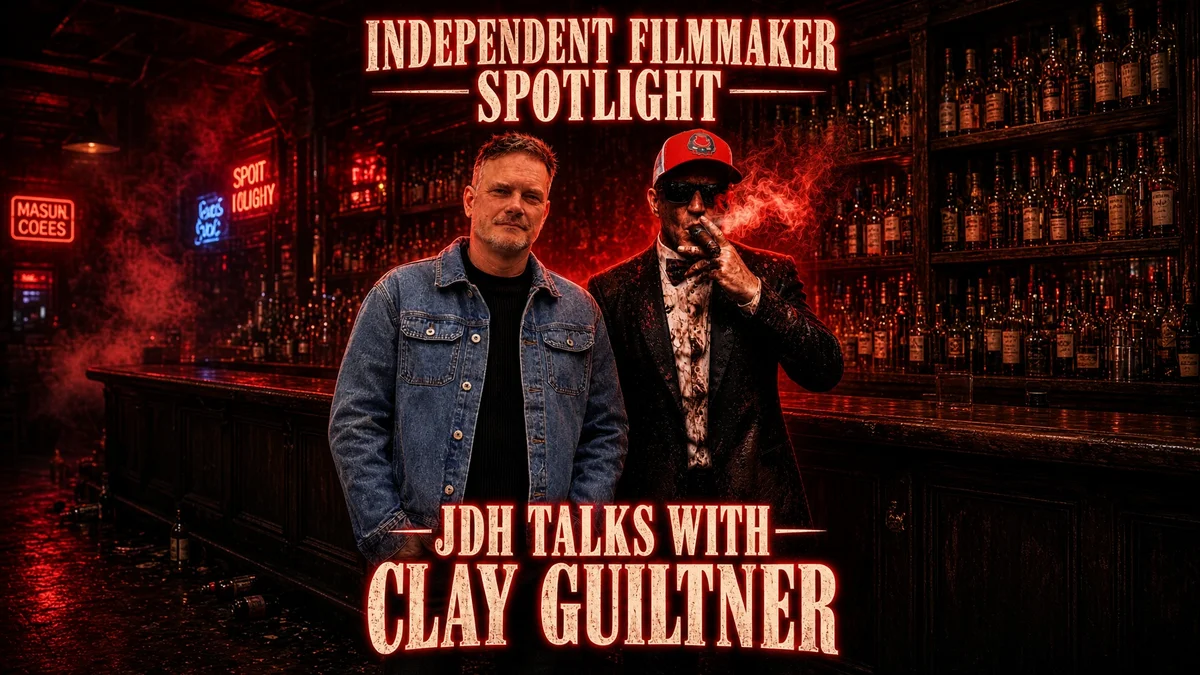
Clayton Guiltner on why theater discipline still matters, how he finds distribution, and the budget range that makes indie films viable today.
“It’s a legal thing — the words on the page are our guide.” — Clayton Guiltner
Clayton begins there, not with a manifesto about aesthetics but with a practical rule he learned in theater and still carries into filmmaking: respect the writer’s text. That sentence presses the theme of this conversation — theater’s discipline shaping a director who now makes and teaches films in a streaming world.
Rehearsal discipline that still shapes how he directs
Clayton grew into directing because he needed a role that fit him — he couldn’t sing or dance, so he signed up to lead. Theater taught him a rehearsal model that looks nothing like a modern film set: weeks of blocking, choreography and iteration so actors “have every nuance” memorized before opening night.
That training has real payoffs on set. Clayton says the theater mentality — don’t rewrite the playwright’s words lightly, know your staging — gives him clarity when he’s working with actors and a DP. On film, he allows actors room to “massage” dialogue for a natural performance, but his default is fidelity to the script. For him, rehearsal is traded for conversation during long setup times on digital shoots, and he treats that downtime as rehearsal in disguise: an opportunity to talk through the scene so actors arrive ready.
Moving from theater to features: logistics, crew, and the DP relationship
Clayton didn’t flip a switch from stage to screen in 2016; he’d dabbled in film earlier. Still, making a full-length feature sharpened how much directing is also producing — the logistics, organization and who you call to make things happen. He emphasizes the director–DP relationship as a major learning curve: communication, trust and a shared language about how to get the movie made.
He’s pragmatic about crew size and pace. Digital cameras and lean crews let a film that might have required costly film stock decades ago be made on a tighter budget and schedule today, but that speed changes the rhythm actors must adapt to — long waits then intense bursts of performance.
On distribution, Clayton’s path was old-school but instructive: he finished the film, reached out to sales agents and distributors, and chose a partner based on terms. He didn’t premiere at festivals before securing distribution — the distributor found streamer placements and library outlets, and Clayton calls the relationship “pleasing,” while acknowledging returns tend to be a slow burn rather than instant payoff.
“A film has to live in the universe for a few years before it really generates,” — Clayton Guiltner
He also notes the difference between the era of territory checks (selling a territory for a lump sum) and today’s streaming landscape, where the strategy is presence across many platforms so viewers can discover you over time — even via unexpected outlets like library systems.
Teaching, the market today, and practical rules for filmmakers
Clayton teaches at the Los Angeles Film School and says the best education mixes craft and reality: students need hands-on work and an ongoing update on an industry that has changed dramatically over the past decade. He keeps his lectures current, because business models and distribution paths keep shifting.
Three concrete pieces of advice he repeats:
- Learn the language of the business; you don’t have to be the producer, but understand budgets and strategy.
- Keep budgets as low as possible; aim to look bigger than you spend.
- Use the network: the film industry is tight-knit, and relationships open the next project.
On budgets and genre: from a distributor’s perspective Clayton says the market sweet spot for an indie feature today is roughly $250,000 up to $750,000. Keep it lean, choose your cards — cast, locations, production values — and you can make something that reads like a higher-budget picture. And if you’re thinking about which genres currently sell, he reports distributors favor horror and faith-based titles right now.
Clayton also weighs in on vertical/short-form serial formats. He’s cautious — “old school” by his admission — but acknowledges actors are finding steady work there and that the formats often deliver rapid, conflict-driven storytelling in two-to-five-minute beats. He hasn’t fully jumped in, but he sees the trend moving quickly and expects more filmmakers to adapt.
Where he’s headed and the takeaway
Clayton’s goals are modestly stubborn: keep telling stories. He’d be happy directing and producing a film or two a year rather than chasing studio status. For him the work that endures is the combination of theatrical rigor — respect for text and rehearsal — plus the flexible, entrepreneurial approach modern filmmaking demands.
If you remember one tangible hook from this conversation: treat your script like a contract but your production like a puzzle — keep budgets lean (target the $250k–$750k band), learn enough of the business to speak its language, and build a small, trusted crew (particularly a DP you can communicate with) you can bring from project to project.
If you want the full conversation — the stories about his Christmas rom-com Hope’s Hollywood Christmas, the quirky Pillow Armor, and more on teaching and distribution — the episode is worth a listen. Clayton’s blend of theater discipline and practical producing is a useful model for filmmakers trying to make sustainable work today.